There's no fixed number of weeks. If you're wondering when to say "I love you" in a long-distance relationship, the answer is: when the feeling is about the real person, not just the chats, and when you can say it without needing an instant reply. For many couples, that comes after a few months of steady contact, honest talks about the future and, ideally but not necessarily, a first visit. If you can, say it live, on a video or phone call.
When should you say "I love you" in a long-distance relationship?
Say it when the feeling has held steady over time and is about who your partner actually is, day to day. Distance doesn't change that rule. It just makes it harder to test.
In a long-distance relationship, much of your connection lives in messages, voice notes and late-night calls. That can build real closeness fast. It can also build a version of the other person that's partly made up, with your imagination filling the gaps between texts. That's where understanding the difference between love and infatuation really helps.
So the useful question isn't "How many weeks has it been?" It's "Do I love this person, or the feeling of being talked to?" A few checks help:
- You've seen them on bad days, not only good ones: tired, stressed, annoyed, busy.
- Your contact has a rhythm you both keep without being asked.
- You've disagreed about something, and it went okay.
- You both talk about the future in concrete terms: the next visit, who travels, rough plans to close the distance.
For context, research on in-person couples suggests people start thinking about saying it within the first few months. In one series of studies, men reported first considering a love confession around 97 days into a relationship, roughly six weeks before women did (source : https://dspace.mit.edu/bitstream/handle/1721.1/65923/Ackerman_Commitment-paper_final.pdf;sequence=3). That measures when people thought about it, not when they said it. Treat it as context, not a deadline: long-distance couples often talk more than in-person couples but share far less ordinary time.
What are the signs it's the right time to say it?
The clearest sign is that the words would describe what's already happening, not try to create it. If you both already act like people in love, "I love you" is just catching up. And if you're still asking yourself how you know you love someone, the lists below are a good place to start.
Signs you're ready:
- You'd still say it if they don't say it back right away. If a quiet reply would crush you, give it a little more time.
- You're not using it to fix something: after a fight, to stop them pulling away, or to rescue a visit that went badly.
- You're exclusive, or you've at least talked about what you are to each other.
- Their actions show investment. They make time across time zones, remember small details, and help plan the next visit.
- You picture an "us" in the future, not just the next conversation.
Signs to hold off a bit:
- You've only been talking intensely for a couple of weeks.
- Almost everything you know about them comes from text, and you've barely heard their voice.
- The pressure comes from a date on the calendar (the end of a visit, a dating "anniversary") rather than from the feeling itself.
Is it too soon to say "I love you" before meeting in person?
Not necessarily. You can feel real love for someone you haven't met yet, especially after months of honest conversation and video calls. Just know that meeting adds information, and feelings can shift in either direction once you share a room.
This situation is common, because more and more relationships now start online. If you haven't met yet, you have three honest options:
- Say it, with context. "I know we haven't met yet, and I'm so excited for that. But I don't want to pretend I don't feel this. I love you." Naming the gap shows you're clear-eyed, not swept away.
- Say something true that stops one step short. "I'm falling for you" or "I didn't expect to feel this much for someone I met online" is honest without being final.
- Wait for the first visit and say it there. If a trip is already booked, waiting gives you the moment face to face. Just don't make the whole visit hinge on it, and read up on what to expect when you first meet so the big day feels less overwhelming.
What matters most is that you're roughly aligned on how real this is. If one of you thinks you're dating and the other thinks you're pen pals with a crush, "I love you" will land badly no matter where you say it.
Should you say "I love you" over text or on a call?
If you can, say it the first time by voice: a video call is best, a phone call is next. Text is fine, especially if writing is how you two connect most, but a live conversation lets you hear each other's reaction and respond in the moment.
Here's how each option plays out:
- Video call. You see their face and they see yours. Pick a calm moment, not five minutes before one of you has to sleep or start work. Avoid blurting it out as you hang up, because it leaves them no room to answer.
- Voice note. A good middle ground if you're nervous. They hear your voice, and you don't have to watch them react live. The downside is the wait for their reply.
- Text. Works if most of your relationship lives in writing, or if time zones make live calls rare. Keep it simple, and avoid sending it in the middle of their night, when it can read as impulsive.
- Handwritten letter. Slow, which is the point: it shows you thought about it. It works especially well if you've already said it once and want to say it properly, or if you time it to arrive just before a visit. If you've never written one, start with these tips on how to write a love letter.
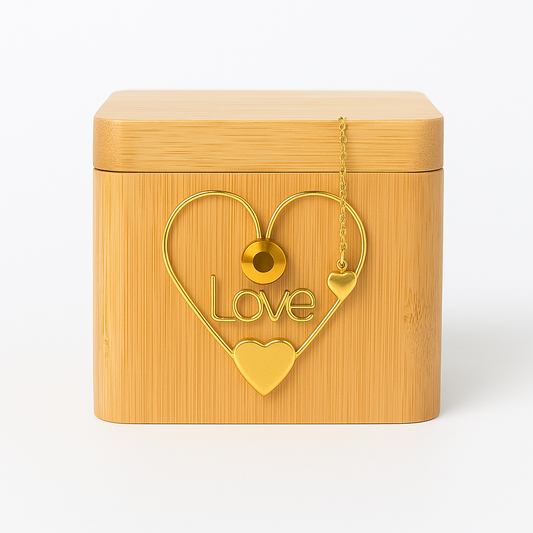
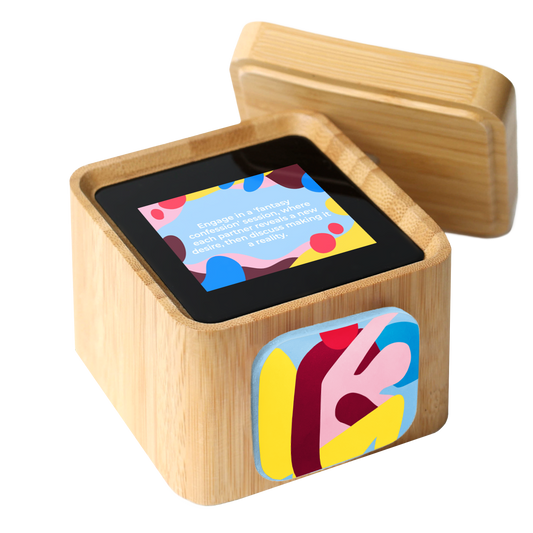
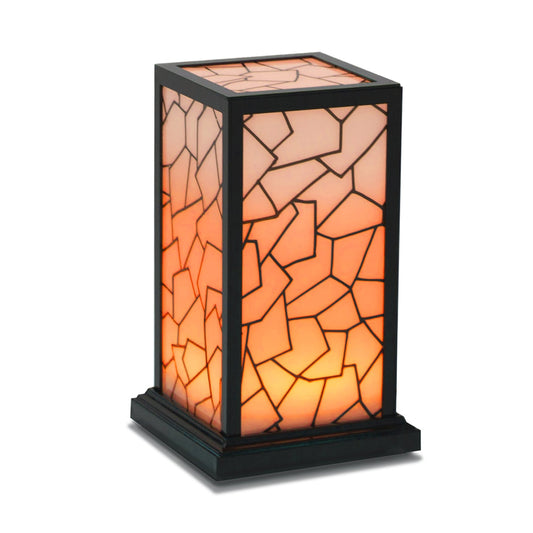
After the first time, small everyday reminders matter as much as the big moment. Some couples like having a physical object at home for that. A Lovebox, for example, is a wooden box where a heart spins when a message sent from the app arrives, so "I love you" becomes something your partner discovers rather than one more notification.
How do you say "I love you" first without being there?
Keep it short, plain and about them. You don't need a speech. Say it, add a reason if you want, and leave room for them.
Examples you can adapt (and if you want more options, here are 100 more ways to say I love you):
- "I've wanted to tell you this for a while, and I'd rather say it than keep holding it in. I love you."
- "You don't have to say anything back right now. I just want you to know: I love you."
- "Every time we hang up, I already miss your voice. I'm pretty sure that means I love you."
- "I know we haven't been in the same room yet. I love you anyway, and I can't wait to say it in person too."
- "You make the distance feel smaller. I love you."
A few things to avoid:
- Saying it as a joke so you can backpedal ("lol jk... unless?"). It makes it harder for them to take seriously.
- Saying it in the middle of an argument, or right after one.
- Sending a string of follow-ups if they don't reply within minutes. Time zones, work and nerves are all normal reasons for a pause.
What if your long-distance partner doesn't say it back?
A different response doesn't automatically mean they don't care. People move at different speeds, and some need more time, or need to meet in person, before saying words they consider serious.
What to do in the moment:
- Don't take it back. "I meant it, and there's no pressure" is enough.
- Ask a gentle question later, not right then: "How did it feel to hear that?"
- Really listen to the answer. "I care about you a lot, and I want to say it when I'm sure" is a good answer, not a rejection.
Over the following weeks, watch what they do more than what they say. If they keep making time, planning the next visit and showing interest, they may simply be slower with words. If they turn distant, dodge the subject or stop making plans to meet, it's time for an honest talk about where each of you thinks this is going.
It's fair to want to hear it back eventually. It's not fair to either of you to put it on a timer.
FAQ
How long should you wait to say "I love you" in a long-distance relationship?
There's no set amount of time. Many people feel ready after a few months of steady contact, honest conversations and some shared plans for the future. The real test is whether your feeling is about the actual person and whether you can say it without needing an instant reply.
Can you really love someone you've never met in person?
Yes, many people develop genuine feelings through long conversations and video calls. Meeting in person adds new information, though, so stay open to your feelings deepening or shifting once you're together.
Who usually says "I love you" first?
In research on couples, men more often report saying it first, even though people tend to expect women to. There's no rule either way: whoever feels ready and calm about it can go first.
Is it okay to say "I love you" for the first time over text?
Yes, especially if writing is how you two connect most. A voice or video call lets you hear each other's reaction, so choose that when you can, and keep a text simple and sincere when you can't.
Should I wait until our first visit to say it?
If a visit is already planned and coming up soon, saying it in person can make the moment special. If it's far off and you clearly feel it, you don't have to wait: saying it on a call is just as real.